

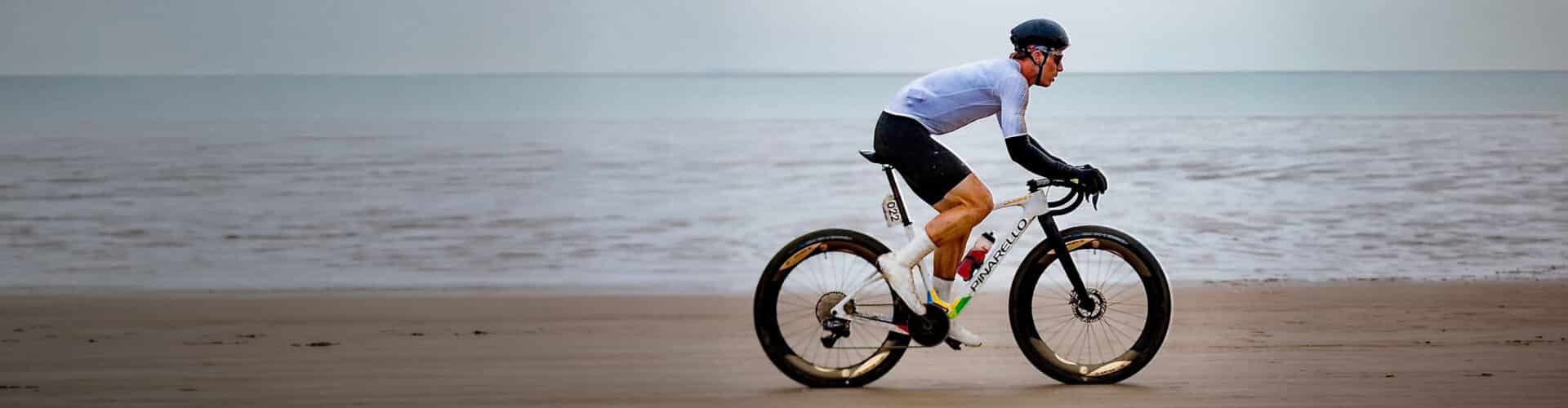
When the sand is loose and the wind is against you, the last thing you want is a wheel that gives up before you do. A beach race starts in soft sand, runs on hard-packed sand at the waterline and ends with salt in every part of the bike. It is hard on a wheelset in a way that neither a road race nor a gravel ride is, and beach racing wheels have to cope with all of it at once.
The short answer on beach racing wheels
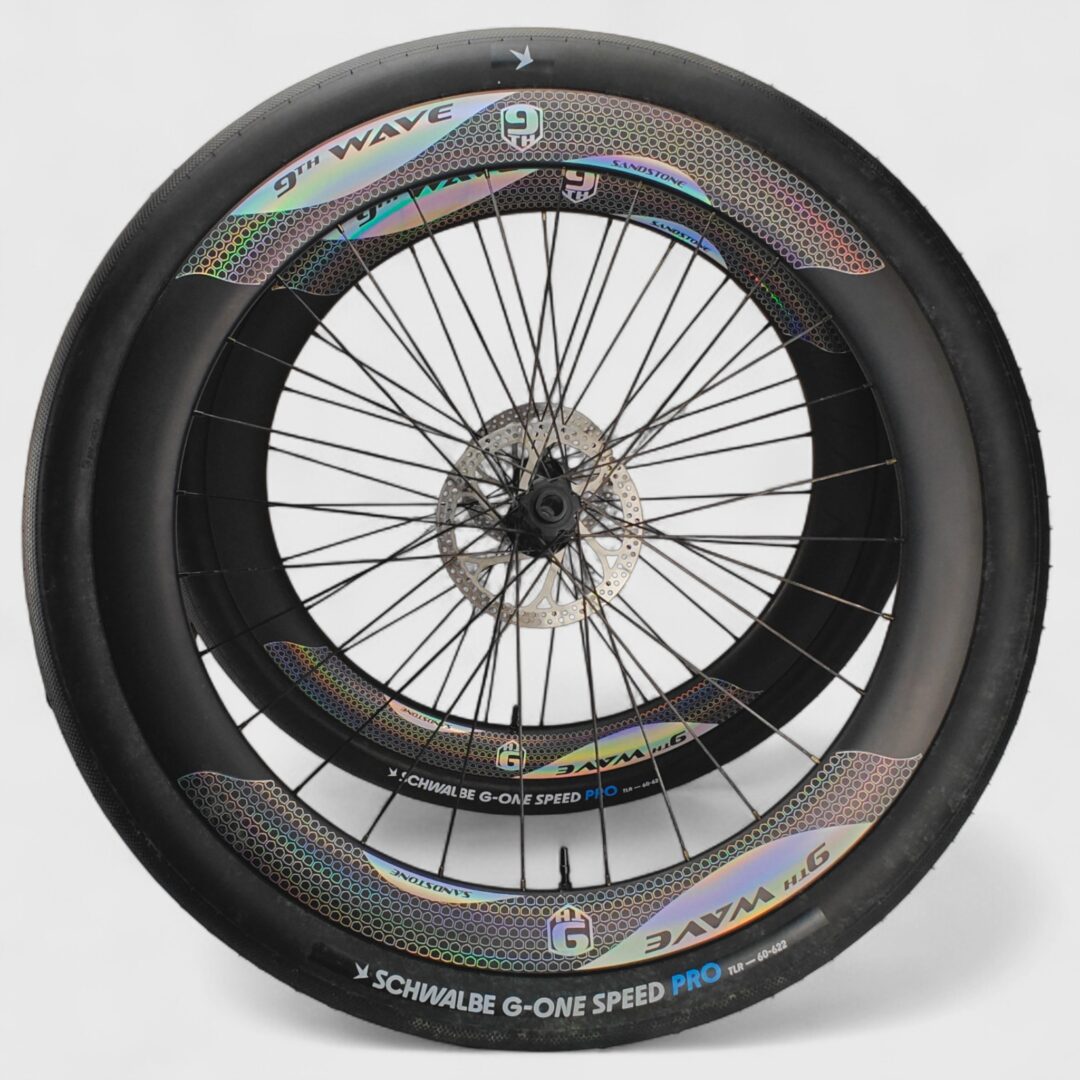
A good beach racing wheel combines three things: a wide hookless rim for a large tire at very low pressure, brass nipples that survive salt, and a hub that keeps running when sand gets in. We build three wheelsets for it, the 4-Shore, the SandStone and the SandStone Boost. All three have a 33 to 37mm internal width, brass nipples and DT Swiss 350 hubs, and all three are rated for riders up to 135 kg including gear.
What sand and salt do to a wheel
Sand is abrasive and salt is corrosive, and the part of a wheel that suffers most is the spoke nipple. An aluminium nipple in salt spray corrodes and swells, and a seized nipple means you can no longer true the wheel or restore spoke tension. Brass resists that corrosion, which is why every 9th Wave beach wheel uses brass nipples, and why we do not offer aluminium ones on these builds. Brass is heavier, and we accept that: a wheel that stays true all season is worth more on a beach than the grams.
The hub is chosen on the same logic. The DT Swiss 350 is a robust hub that is easy to service, and we build the SandStone and 4-Shore with it as standard, together with brass nipples. It is a very hard combination to wear out. The lighter DT Swiss 240 hubs go into our SL builds, which use aluminium nipples, and that combination is not suited to the beach.
Why the rim is wide, and the pressure is low
In soft sand, a tire that sinks in loses speed on every metre. The answer is a big tire at very low pressure, which spreads your weight over a larger patch and floats on top. That needs a wide rim to hold the tire in shape. Our tire pressure chart gives the rim maximums for these wheels: 3.0 bar on 40 to 44mm tires, 2.5 bar on 45 to 54mm and 2.0 bar on 55 to 64mm. Those are limits, not what beach racers ride. On a 2.35 or 2.4 inch tire in loose sand, a pressure below 1 bar is very common, and the final choice depends on the rider and the type of course. Grinta! magazine tested the 4-Shore on the Belgian coast and reported that the rim’s bead design kept their tubeless tires seated at those pressures. You can read that test in our article on the Grinta! review of the 4-Shore.
Three beach wheelsets compared
| Wheelset | Depth / internal | Tire range | Axles | Spokes | Weight |
|---|---|---|---|---|---|
| 4-Shore | 42 / 33 mm | 40 to 62 mm | Boost 15×110 / 12×148 | 28 / 28 | 1524 g |
| SandStone | 52 / 37 mm | 40 to 66 mm | 12×100 / 12×142 | 24 / 24 | 1460 g |
| SandStone Boost | 52 / 37 mm | 40 to 66 mm | Boost 15×110 / 12×148 | 28 / 28 | 1536 g |
The axle standard of your frame decides first. If you ride a gravel or road frame with 12×100 / 12×142 axles, the SandStone is the match. On a Boost frame, choose between the SandStone Boost and the 4-Shore. The 4-Shore is the original: the first 9th Wave rim built for beach racing, from 2017, and the platform the SandStone later grew out of. It is shallower at 42mm and has 28 spokes. The SandStone Boost shares the wider and deeper SandStone rim with a 28-spoke build, and it weighs 76 g more than the SandStone because of the Boost hubs and eight extra spokes.
Why a deeper rim on the beach
The SandStone rim is 52mm deep and 37mm internal. The depth helps on the long, straight and exposed sections of a beach course, and the width is what gives the tire its volume. We developed the width together with the beach racing specialists at Storm Bikes, who race in exactly the soft-sand conditions this wheel is built for. The ART asymmetric rim design evens out spoke tension between the two sides of the rear wheel, so the wheel holds its shape through repeated hard efforts on constantly changing ground.
Caring for your wheels after a beach ride
Salt and sand do most of their damage in the hours after the race, so what you do straight afterwards matters as much as the components. Four steps keep a beach wheel and bike in good condition:
- Rinse the bike straight after the ride with lukewarm or cold tap water to remove salt and sand. Never use a pressure washer: it forces water past the seals into the bearings and other moving parts.
- Wash the frame and wheels with a mild bike shampoo and a clean sponge.
- Dry everything thoroughly with a clean cloth before you start lubricating.
- Apply a protective polish or wax to the frame and wheels, so sand does not stick as easily. Lubricate the chain, and give the moving parts such as the hubs and freehub body a light spray of silicone.
Keep silicone spray away from your brakes. Silicone on a brake disc or brake pads ruins braking performance and is very hard to remove. Cover or remove the disc and keep the spray away from the pads.
The 32-inch option: SandStone 32
If your frame takes 32-inch wheels, the SandStone 32 puts the same 52mm deep, 37mm internal SandStone rim on a larger diameter, built with DT Swiss 350 hubs and brass nipples like the other beach wheels in this article. A bigger wheel meets ridges, soft patches and washboard at a shallower angle, so it holds speed where a smaller wheel loses it. We explain why in our article on 32 inch beach racing.
Who it is for
These are wheels for people who race on the beach in the Netherlands, Belgium and northern France, and for riders who want one robust set that also handles gravel. The SandStone and SandStone Boost are dual-purpose: the same rim that floats on sand suits wide gravel tires, as we explain in our article on 37mm wide SandStone wheels. We started building dedicated beach wheels in 2017, as the first brand to invest seriously in the discipline. If your frame takes 32 inch wheels, the SandStone 32 uses the same rim and components, and we explain what the bigger diameter does on sand in our article on 32 inch wheels for beach racing.
Frequently asked questions
Why do beach racing wheels need brass nipples?
Salt spray corrodes aluminium nipples until they seize, which makes it impossible to adjust spoke tension. Brass resists that corrosion. Every 9th Wave beach wheel uses brass nipples and DT Swiss 350 hubs.
What tire width should I use for beach racing?
The 4-Shore is rated for 40 to 62mm tires and the SandStone and SandStone Boost for 40 to 66mm. The wider the tire, the lower the pressure you can ride, and the better it floats in soft sand.
What tire pressure do beach racers ride?
Far below the rim maximum. On a 2.35 or 2.4 inch tire in loose sand, below 1 bar is very common, and the final pressure depends on the rider and the type of course. The rim maximum is 3.0 bar on 40 to 44mm tires, 2.5 bar on 45 to 54mm and 2.0 bar on 55 to 64mm.
How do I look after a wheelset after a beach race?
Rinse straight away with lukewarm or cold tap water, never with a pressure washer. Then wash with a mild bike shampoo and a clean sponge, dry thoroughly, and apply a protective polish or wax to the frame and wheels before you lubricate the chain and spray the moving parts, keeping silicone spray away from the discs and brake pads.
Which 9th Wave wheel is best for beach racing?
It depends on your frame. For 12×100 / 12×142 axles take the SandStone. For Boost frames, take the SandStone Boost or the 4-Shore. All three use brass nipples and DT Swiss 350 hubs.
Hand built in the Netherlands, with a lifetime warranty on the carbon rims and our crash replacement programme once you register. View the SandStone, the SandStone Boost or the 4-Shore in our webshop.


