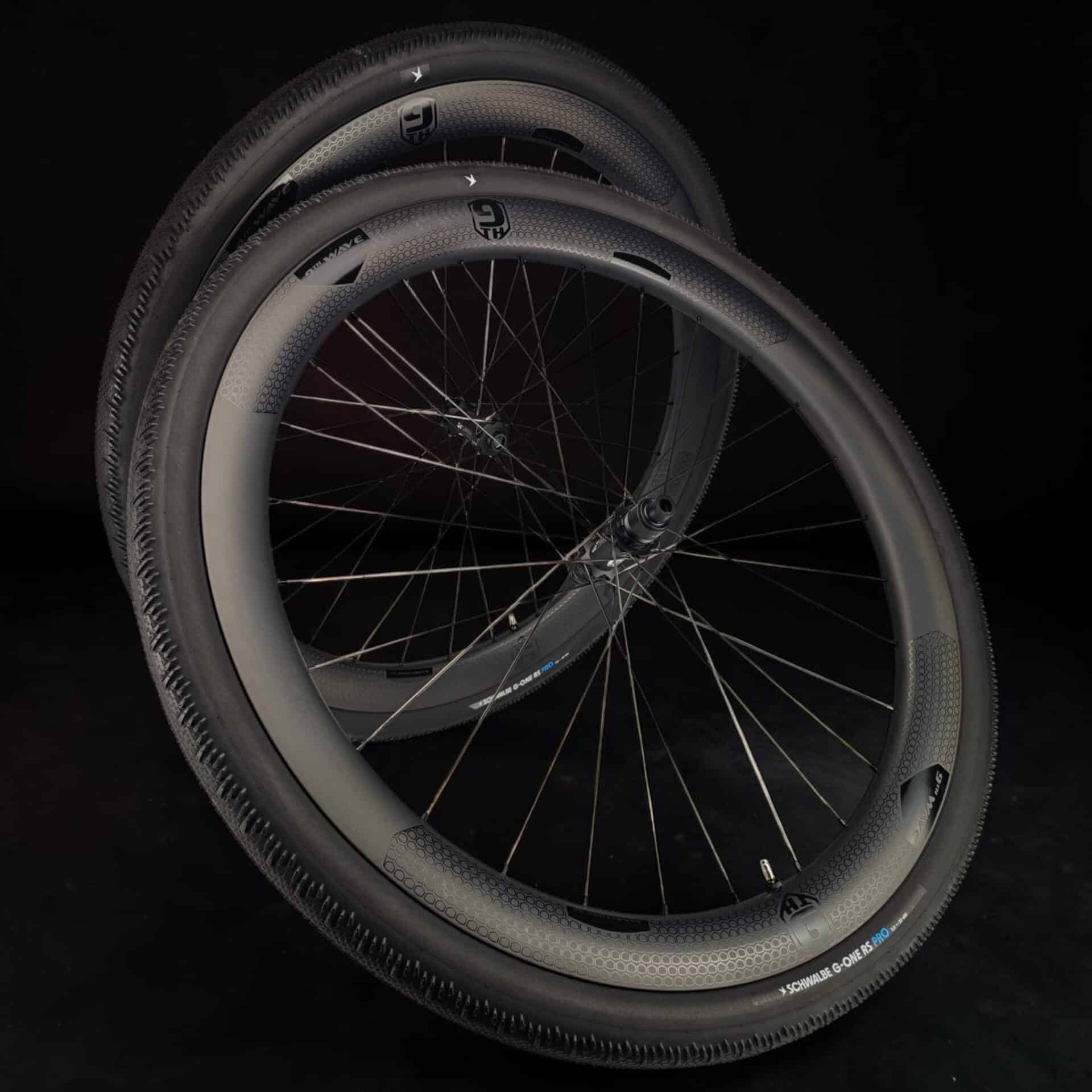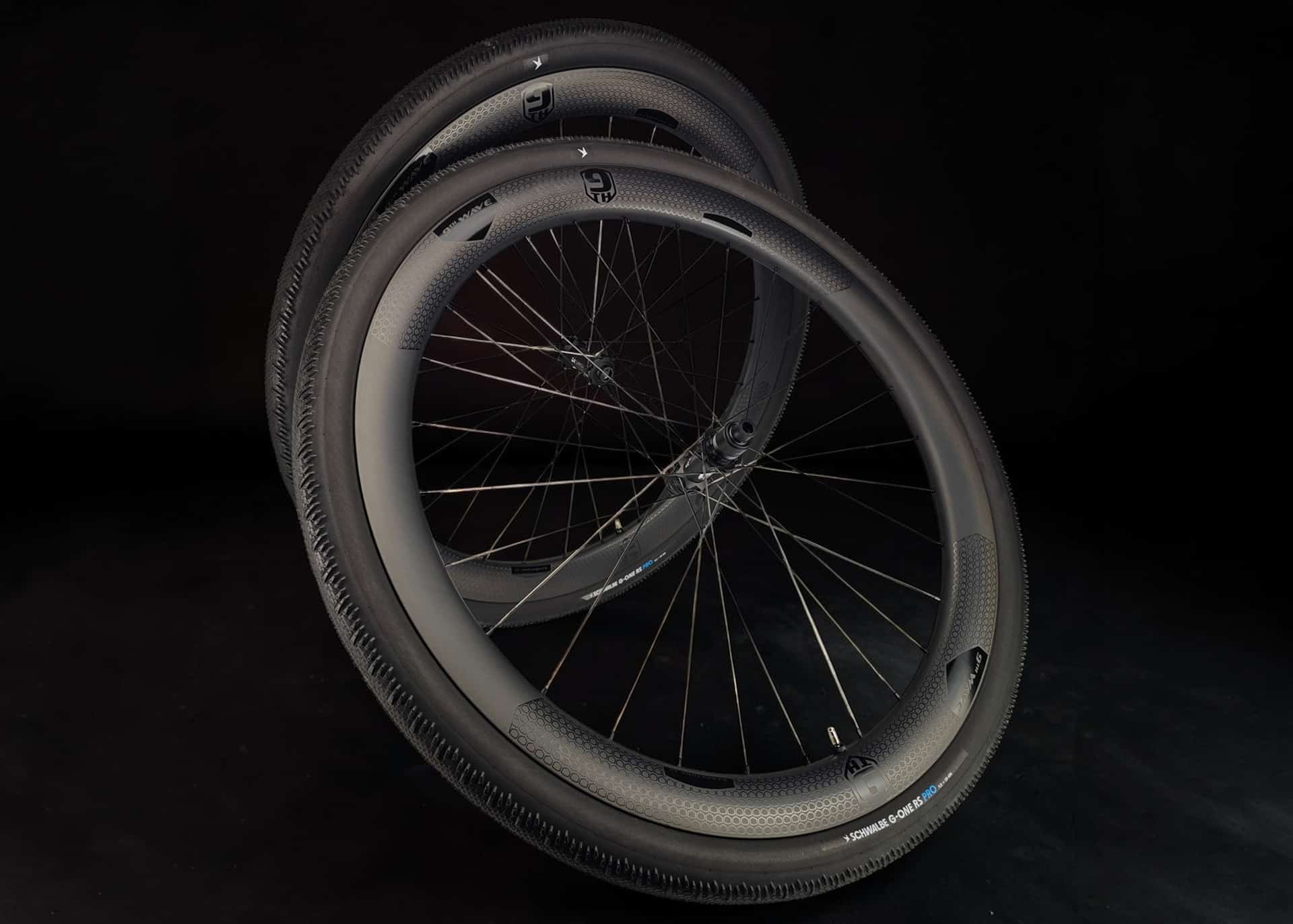
You’re 80 kilometres into a gravel ride. The road surface has deteriorated from packed dirt to loose stone, and there’s a long rough descent ahead. You know from experience that this is where your pace drops — not because your legs give out, but because the terrain starts winning. Every sharp edge costs you speed, every rut asks for concentration. You arrive at the bottom slower than you went up. That is the problem 32-inch gravel wheels are meant to solve.
That’s the moment the SandStone SL32 was built for.
How big is a 32-inch gravel wheel, really?
Most riders assume 32 inches means a dramatically larger wheel. The reality is more precise — and more useful.
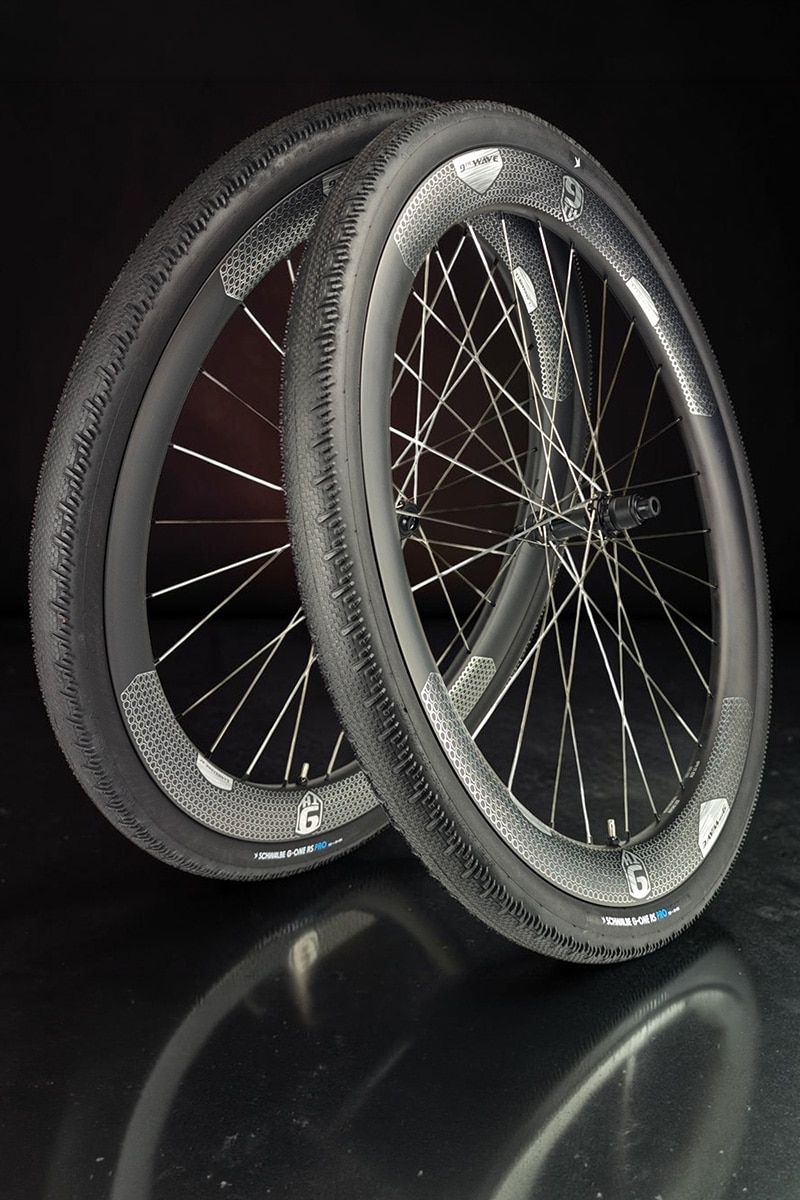
The “32 inch” designation refers to the bead seat diameter of the rim: 686mm ISO, compared to 622mm for 700c. The actual outside diameter depends on the tyre. We measured this directly using Schwalbe G-One RS Pro 50mm gravel tyres — supplied to us as a wheel manufacturer directly by Schwalbe for testing purposes. A 32-inch wheel with a 50mm G-One RS Pro measures 776mm outside diameter. The same tyre on a 700c wheel measures 712mm. That’s 64mm more diameter in total, or 32mm more roll height per side.
In practice: the SandStone SL32 approaches a rock, root, or rut at a shallower angle than a 700c wheel. Less deflection. Less speed lost. More predictable behaviour. The wheel rolls over what the terrain throws at it rather than absorbing the impact — and that changes how you ride the descent at kilometre 80.
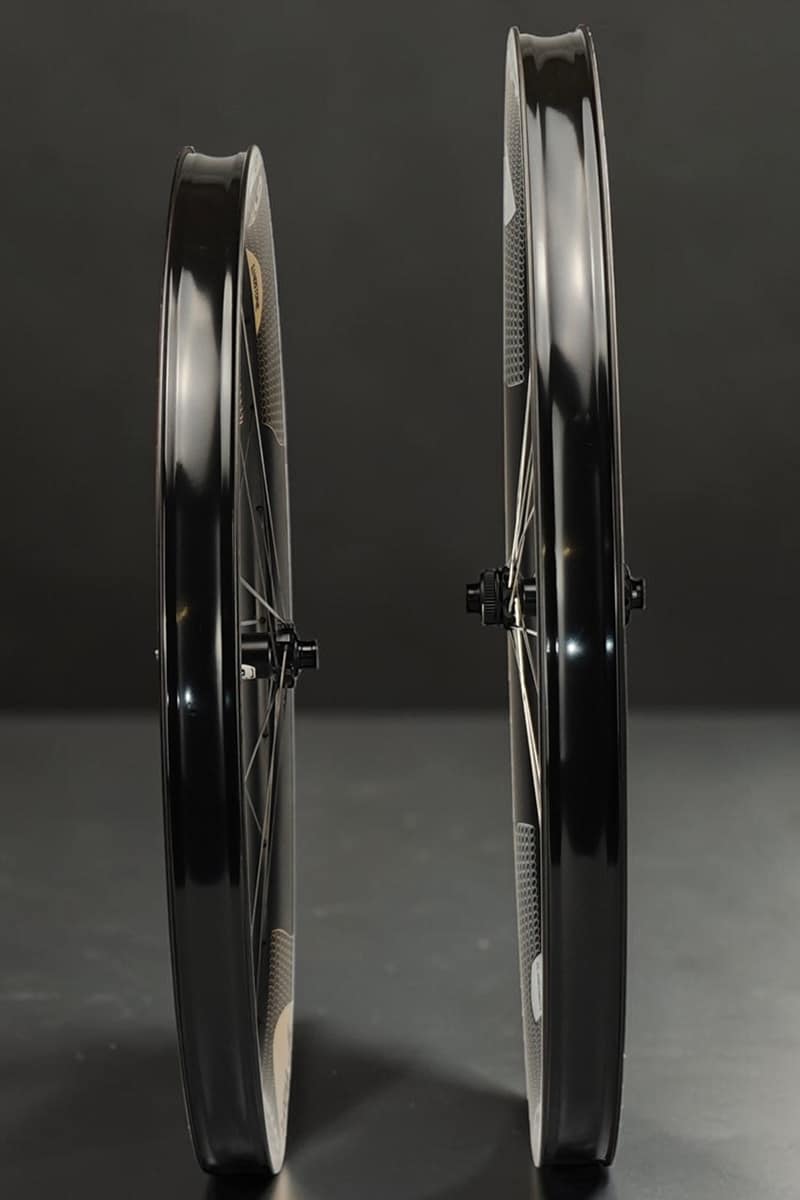
One thing worth clarifying: 32 inches doesn’t mean you have to go wider. With a standard 50mm gravel tyre, you already get more roll height, more air volume, and better damping than 700c — without a single extra millimetre of width. The 37mm internal width is there if you want it. It’s not a requirement.
Is it stiff enough?
A larger diameter wheel has longer spokes, which generally means less lateral stiffness. That’s the legitimate concern — and the SandStone SL32 addresses it at four levels simultaneously.
Rim depth. At 52mm, the effective spoke length of the SandStone SL32 is comparable to a well-built 29-inch MTB wheelset. The depth absorbs most of the diameter penalty before the spokes even come into play.
Spoke count. Most gravel wheelsets run 24 spokes or fewer. The SandStone SL32 runs 28 front and rear — the same count as the 4-Shore beach wheelset, where lateral stiffness on loose sand is a hard engineering requirement.
Boost axle standard. At 15x110mm front and 12x148mm rear, the hub flanges sit further apart than on standard gravel hubs. That increases the spoke bracing angle and directly improves lateral stiffness.
ART asymmetric rim design. 9th Wave’s offset spoke bed equalises tension between the drive and non-drive side. Unequal tension is one of the main reasons large wheels can feel less rigid than their specs suggest — ART removes that variable. It has been part of every 9th Wave wheelset since 2014. On the SandStone SL32, it’s not a refinement. It’s structural.
Where 32-inch wheels add the most in gravel
The 32-inch format brings real advantages to any off-road discipline: more roll height, better obstacle clearance, more air volume, a larger contact patch. In MTB, those advantages show up most in technical grip and control — which is why the Yarrow SL32 was built around that use case, with a shallower 25mm rim profile optimised for trail and XC riding.
In gravel, the same advantages take on a different character. Gravel riding involves higher sustained speeds, longer climbs at lower gradients, and terrain that shifts constantly. The larger diameter doesn’t just improve traction — it changes the energy equation. The wheel holds momentum over rough sections instead of shedding it. Which means you arrive at kilometre 80 with more in the tank than you did before.
Vojo Magazine recently tested the Chiru Veldt, one of the first 32-inch-ready production gravel bikes — which will be specced with 9th Wave SandStone SL32 wheels. Their conclusion: the advantages of 32 inches are particularly pronounced in gravel, where sustained speed and rough terrain let the larger format express itself fully. Safety and confidence on rough terrain were the most immediately noticeable outcomes — not as a trade-off against speed, but as a direct contributor to it.
What 32-inch gravel wheels weigh — and why that matters
The SandStone SL32 weighs 1,579 grams. That’s heavier than a lightweight 700c wheelset — but competitive for a wheel this size and this wide. Factor in the 37mm internal width alongside the 32-inch diameter, and the weight sits exactly where it should. 32 inches in 2026 is not the weight penalty it once was.
The SandStone SL32 is 9th Wave’s second 32-inch wheelset, following the Yarrow SL32 launched in January 2026. Same format, different mission. Where the Yarrow SL32 covers trail and XC with a shallower profile, the SandStone SL32 goes to 52mm depth — built for gravel riders where aerodynamics matter alongside traction, and where the advantages of the larger format are most fully realised.
On the mountain bike side, the same wheel size is covered in what 32-inch wheels change on an XC and marathon course, and the wide, aero take on gravel in why the SandStone SL32 LTD is wide and aero.
View the SandStone SL32 in our webshop.